

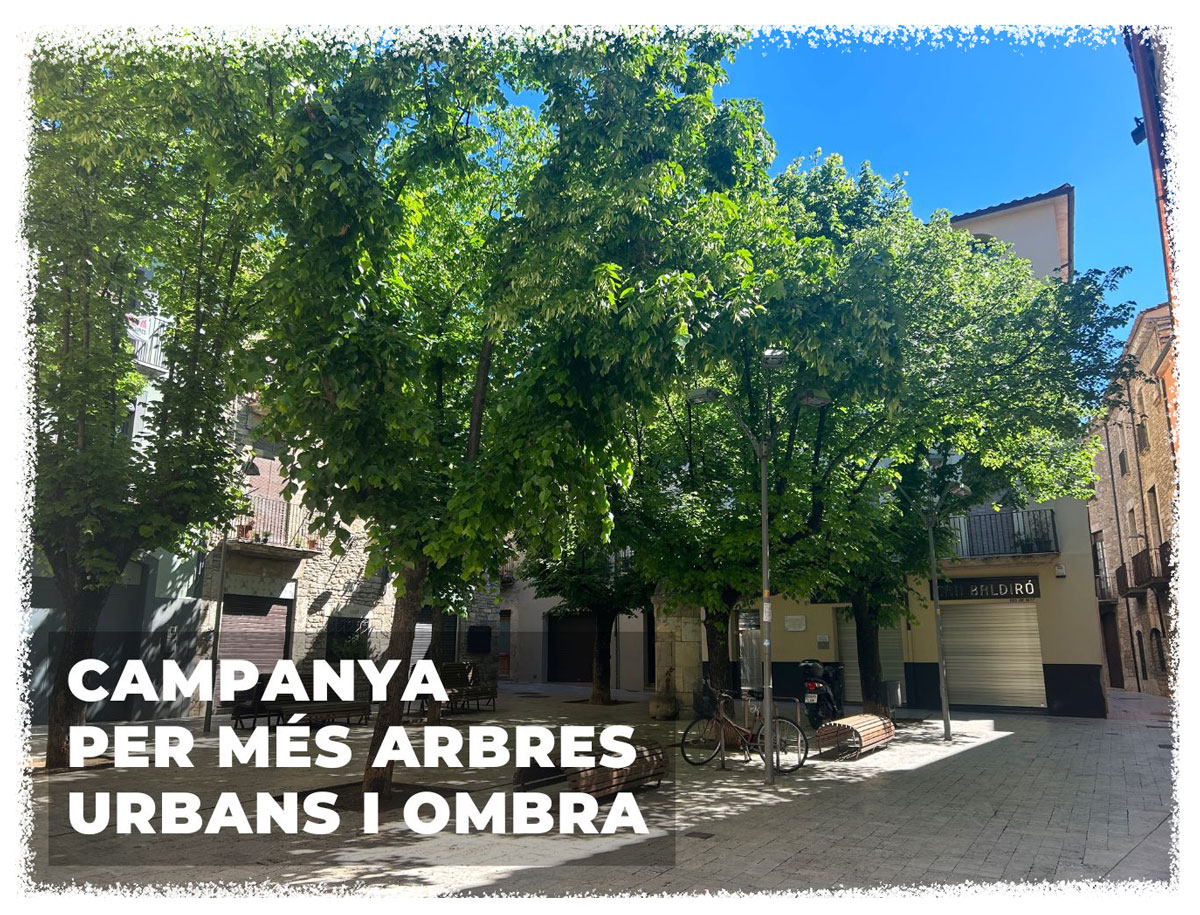
Click this link to sign the petition with Change.org!
Climate change causes the streets of Banyoles to become hotter year after year.
Extreme heat is now common between May and September.
Between 10.00 and 19.00 hours, temperatures on the asphalt and concrete streets of Banyoles can exceed 50 degrees Celsius.
Cyclists and pedestrians, including pensioners and children, suffer the consequences of the heat and sun. Some people find it impossible to leave the house.
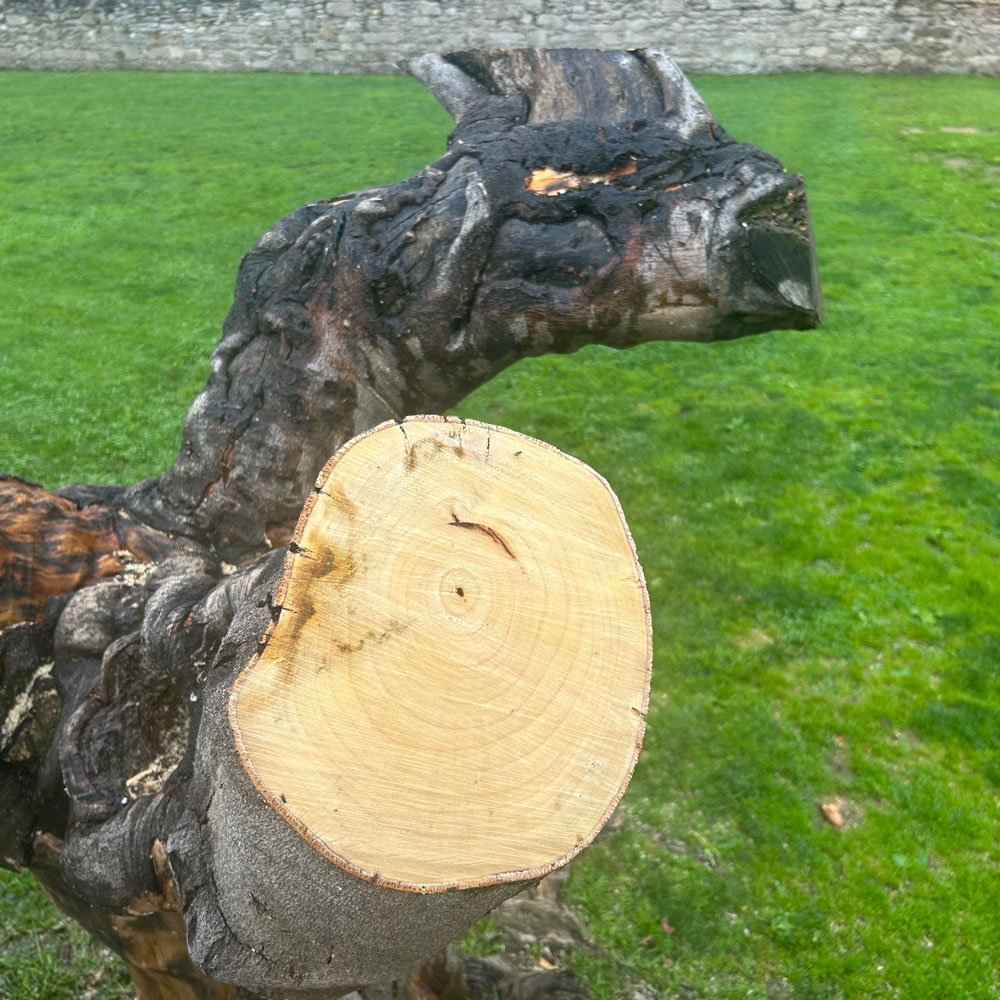
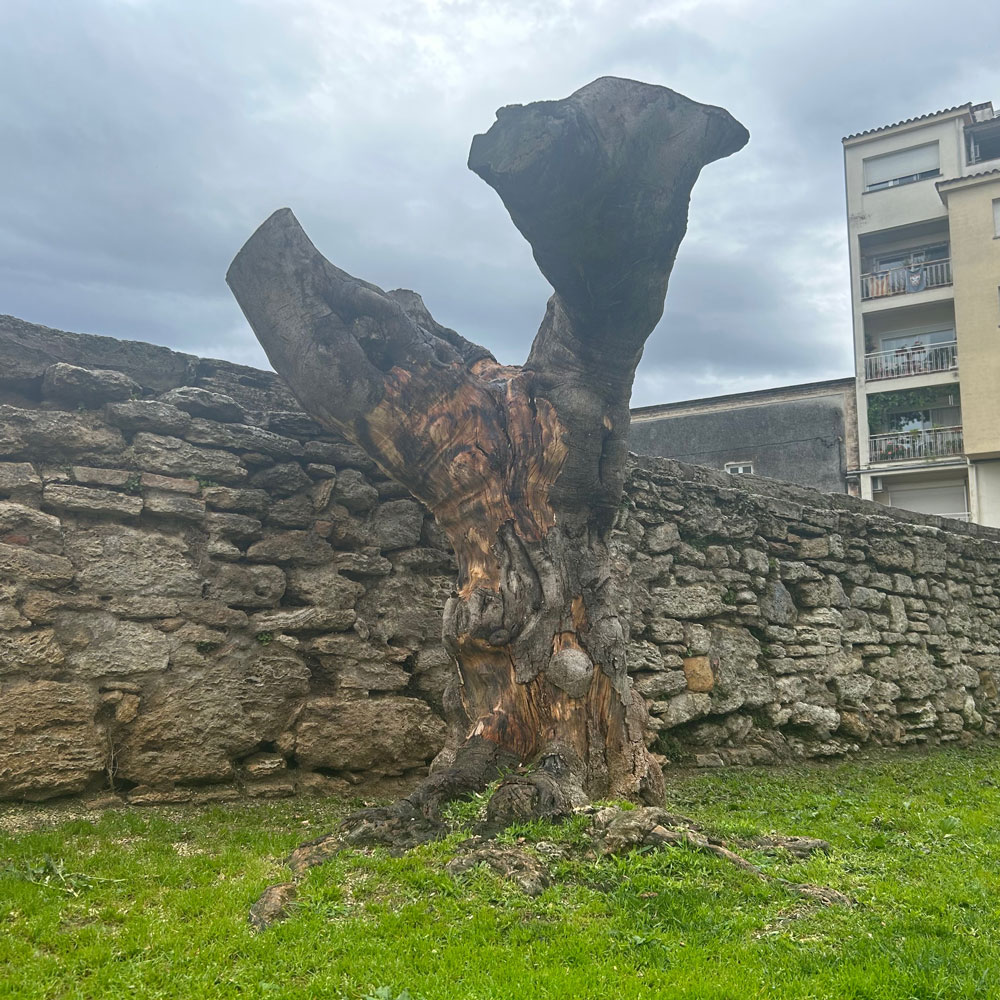
Reasons for more shade
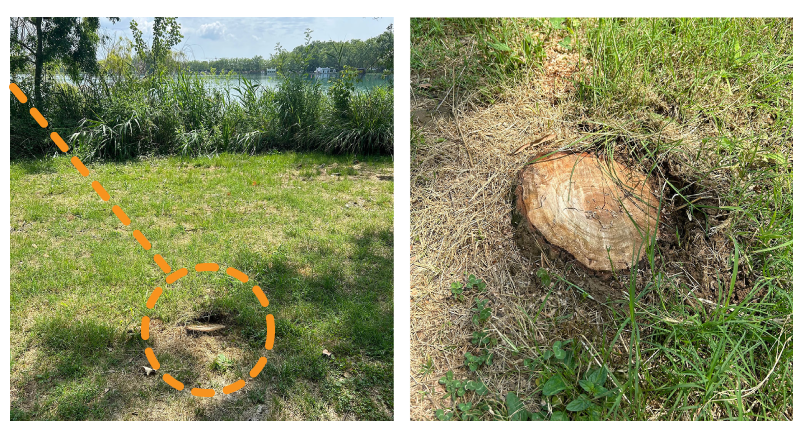
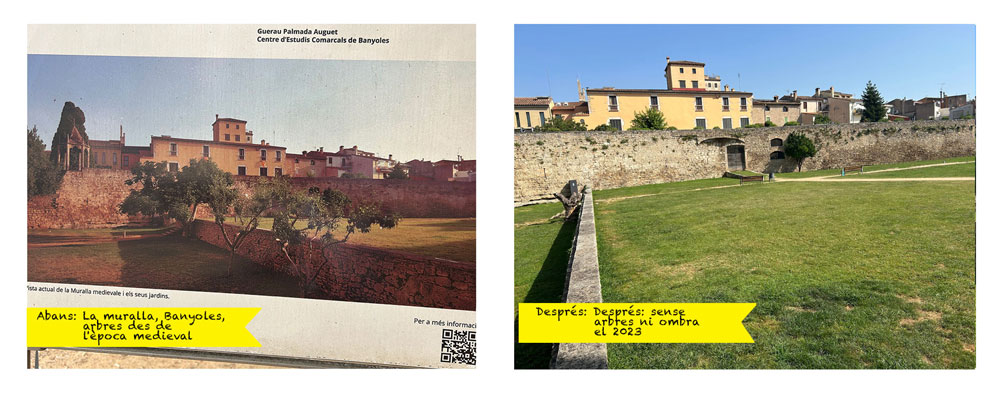
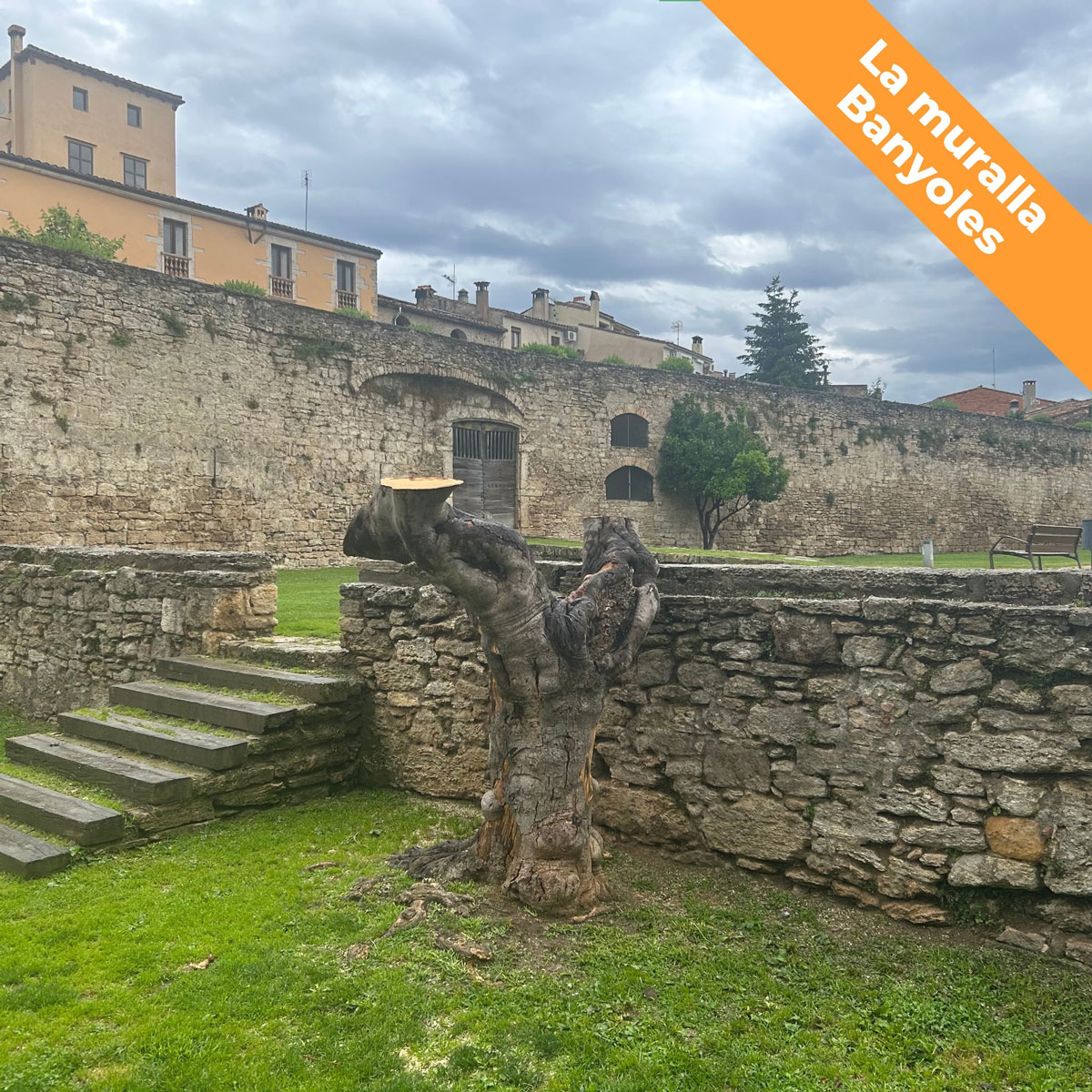
The trees in Banyoles are being cut down without being subsequently replaced by others.
Many of the city’s benches are not located in places where there is shade, but rather in full sun.
There are many types of trees that are suitable for planting near water or on streets.
Including trees that do not cause allergies and trees that lose their leaves in winter to let the light through. **
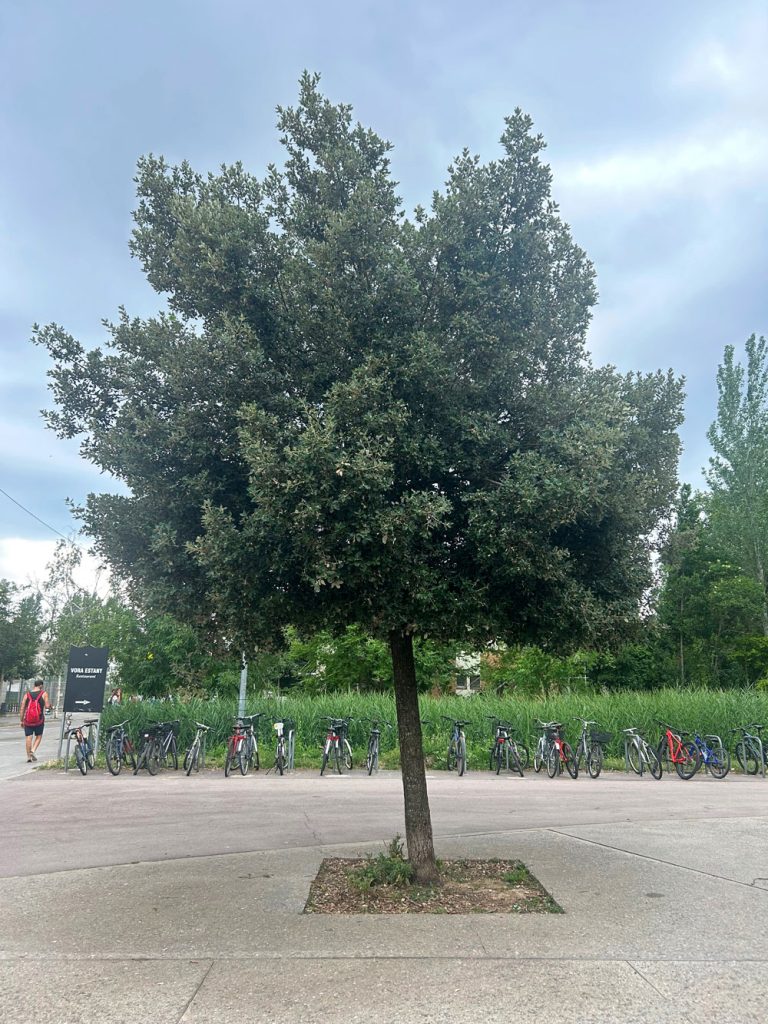
Examples of suitable trees
For example:
1) Oak / Alzina = Oak, with evergreen leaves (leaves all year round)
2) Ash / Freixe = ash, grows well near water
3) European black hornbeam / Carpí negre europeu, with deciduous leaves. In winter it has no leaves.
[ ** Information generously shared by Banyolí Mr. Pedro Cano. ]
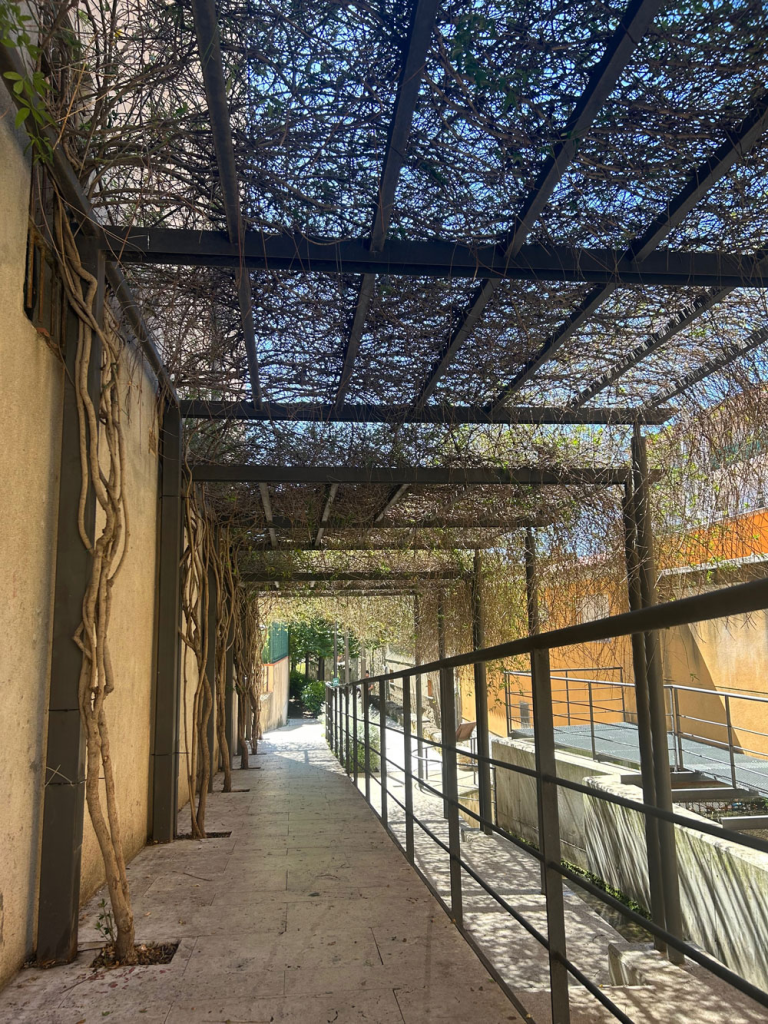
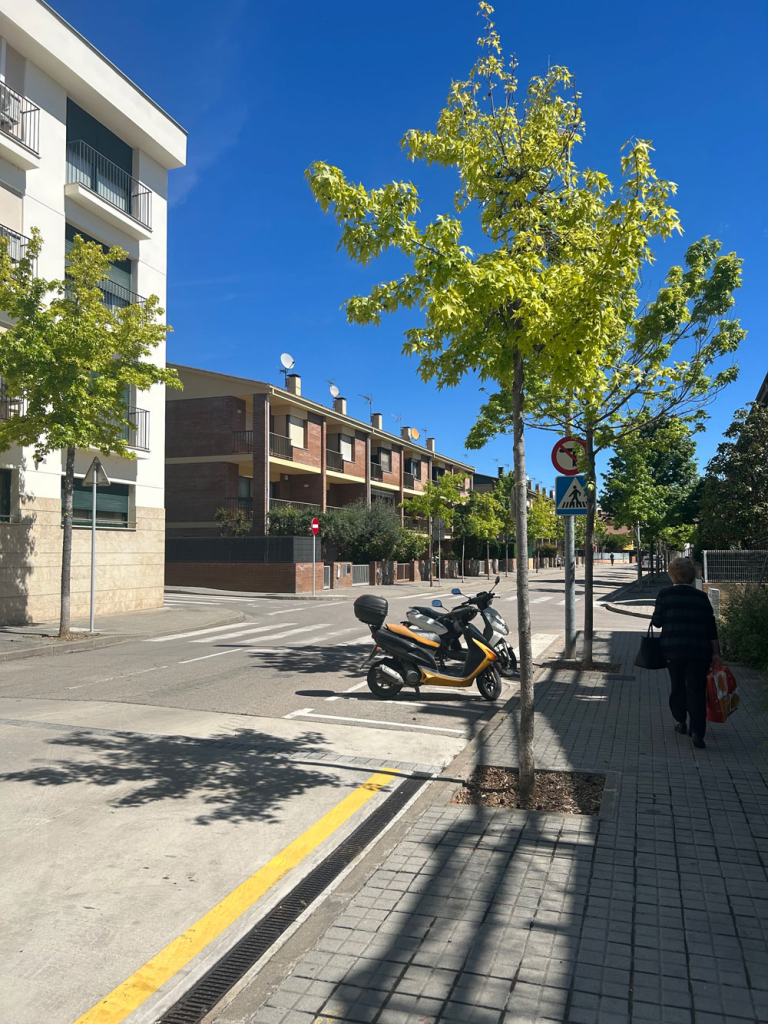
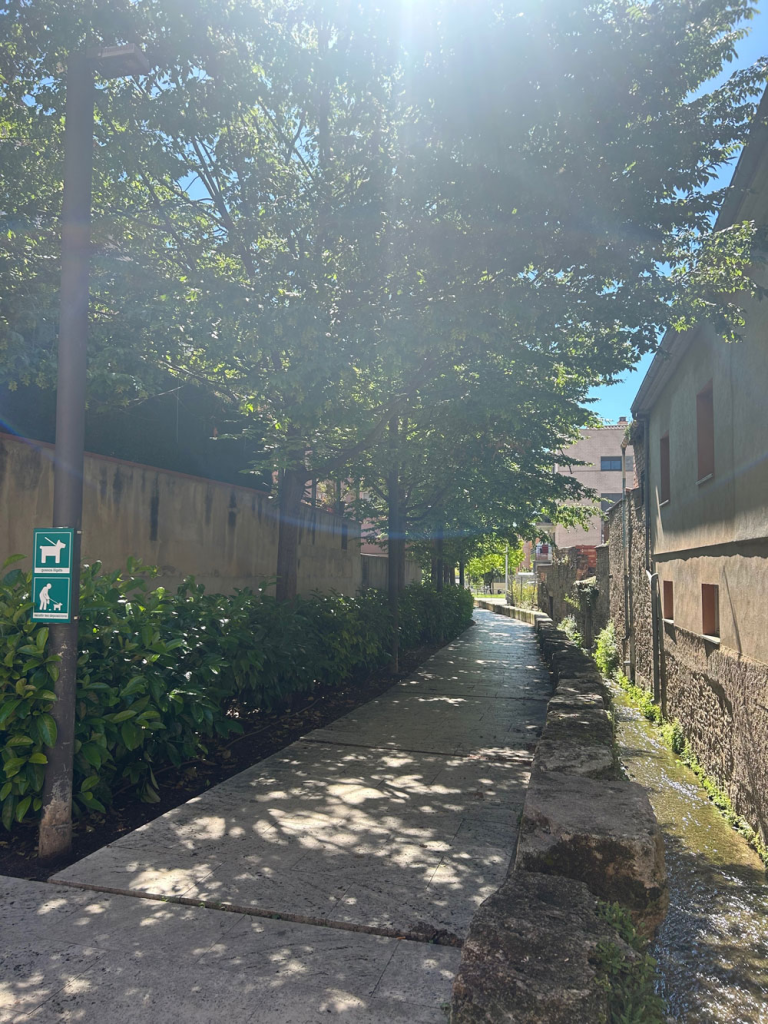
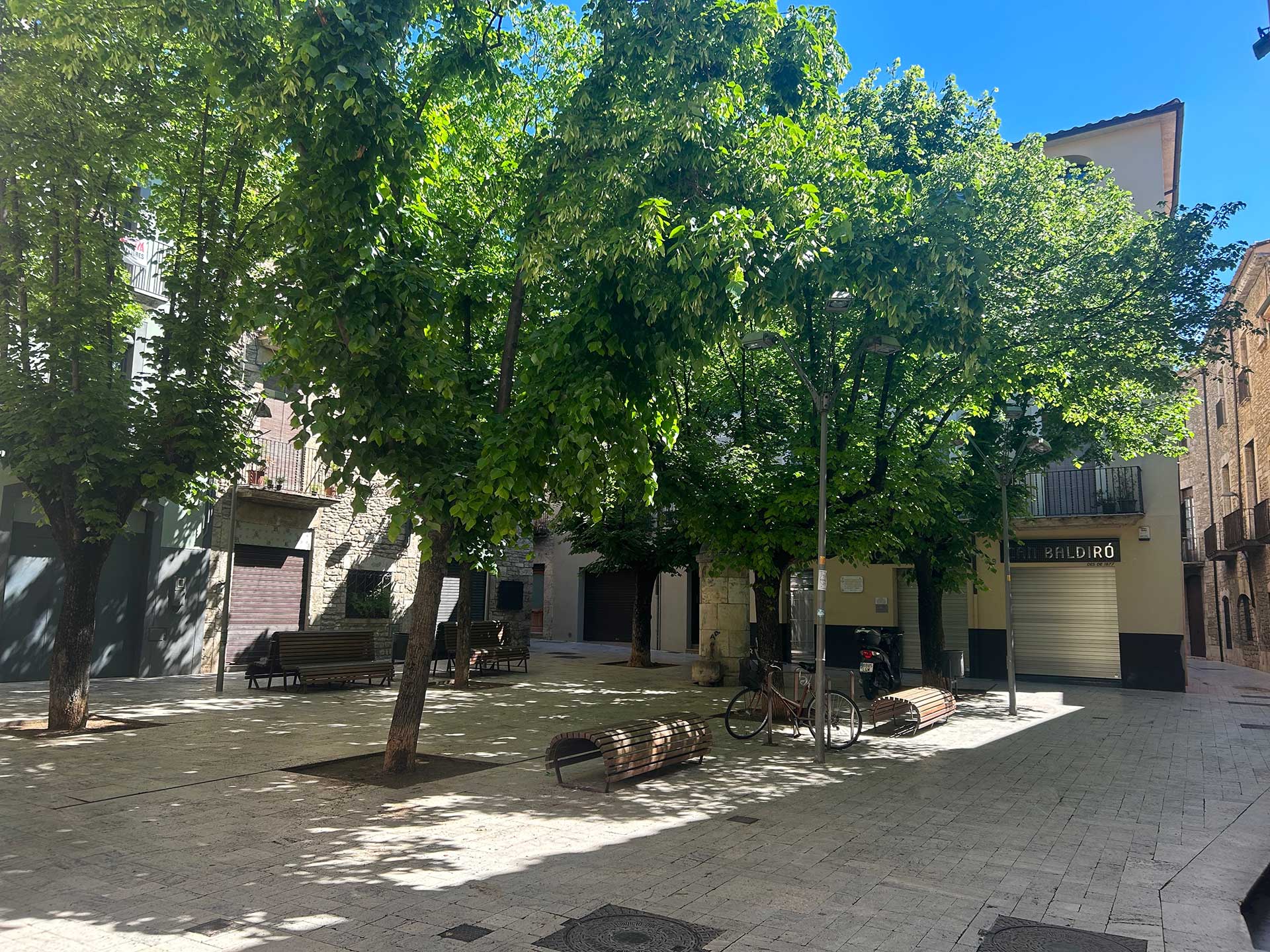
Above: Exemples a Banyoles, 17820, Girona, Catalunya.
Examples of suitable artificial shade
If a street is too narrow for trees, other shade structures are possible.
There are many ways to create shade – see examples from around the world below.
We ask that the City take responsibility for planting more trees and creating more shade to prepare for climate change now!
There are many ways to create shade in the streets of Banyoles!
Check out these wonderful examples from around the world:
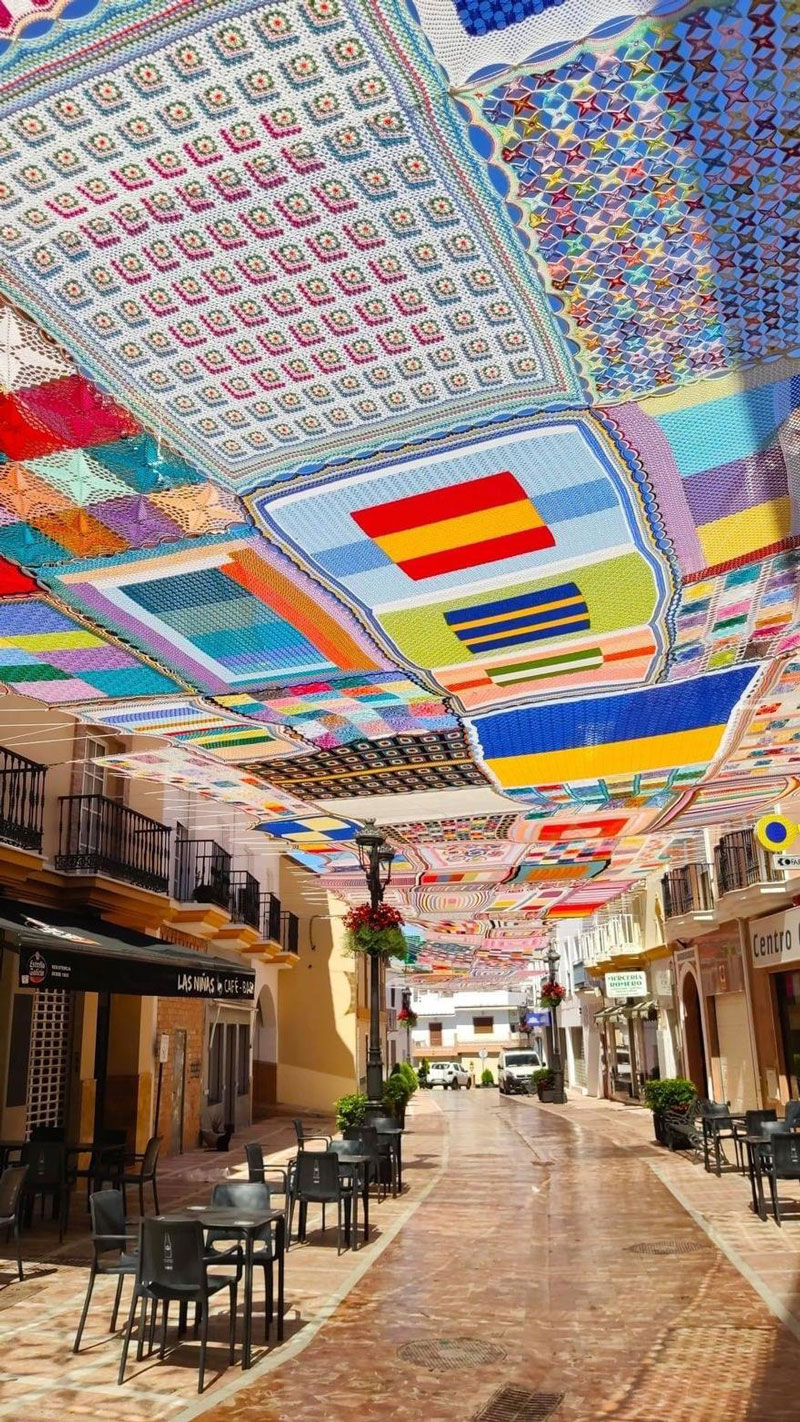
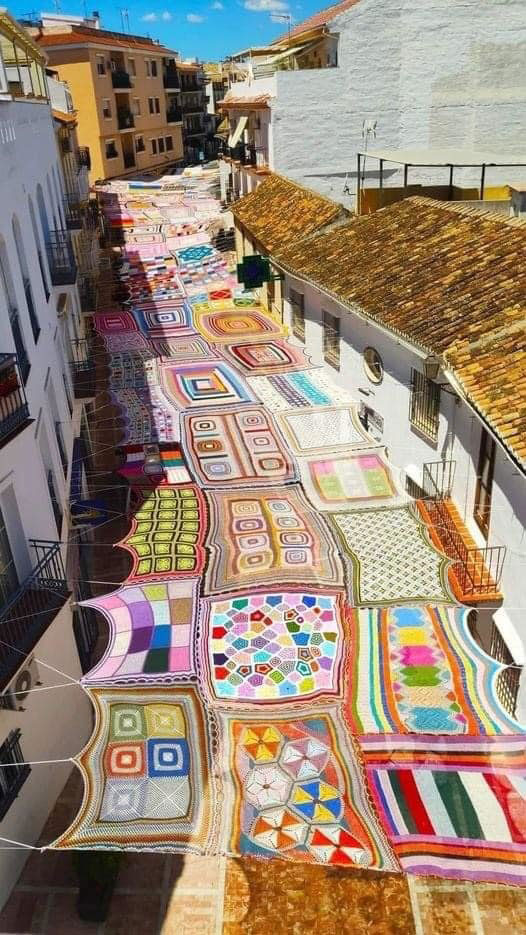
Above: Màlaga, Espanya. Font: https://www.core77.com/posts/109732/from-spain-a-creative-and-eco-friendly-way-to-beat-the-heat
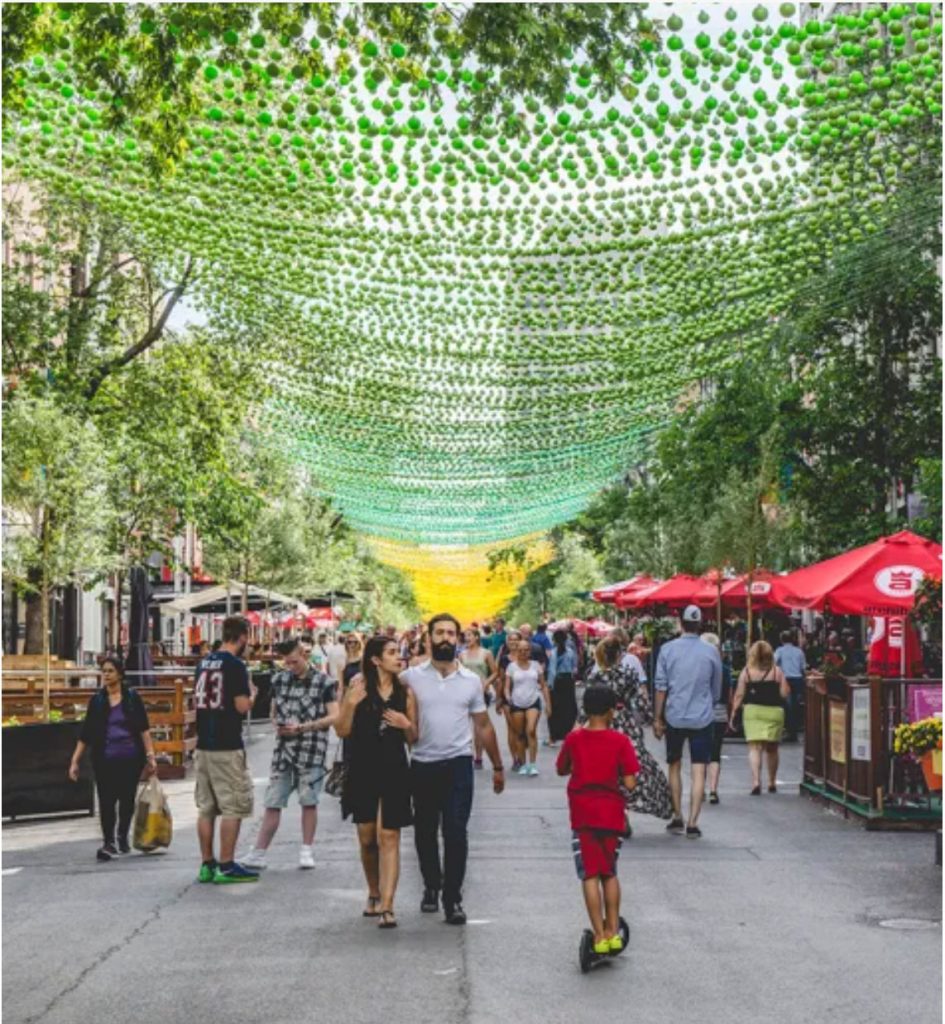
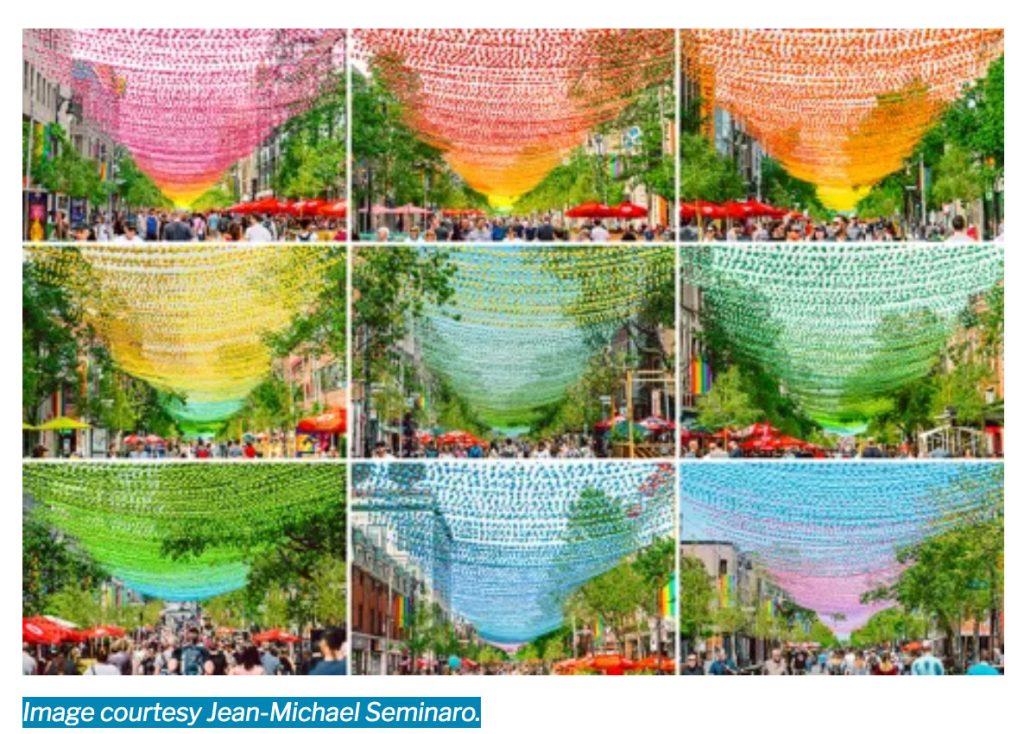
Above: Mont-real, Canadà. Font: https://landscapearchitecturemagazine.org/2018/06/26/full-spectrum/
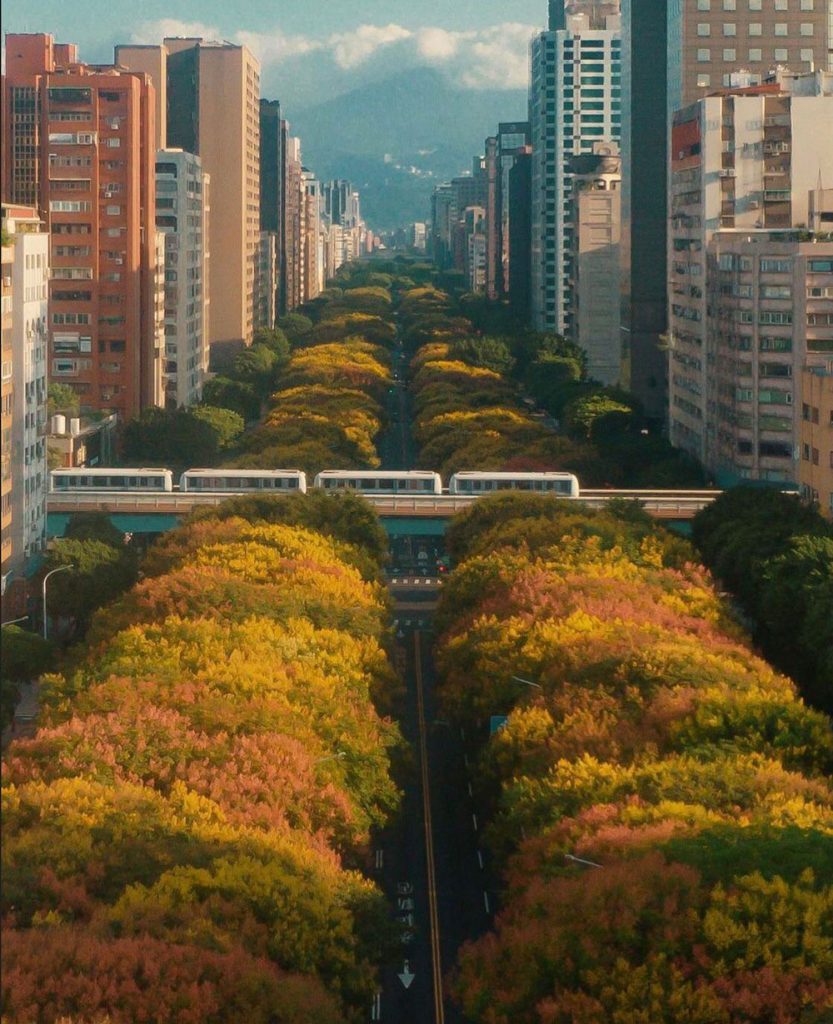
Above: Taipei, Taiwan.
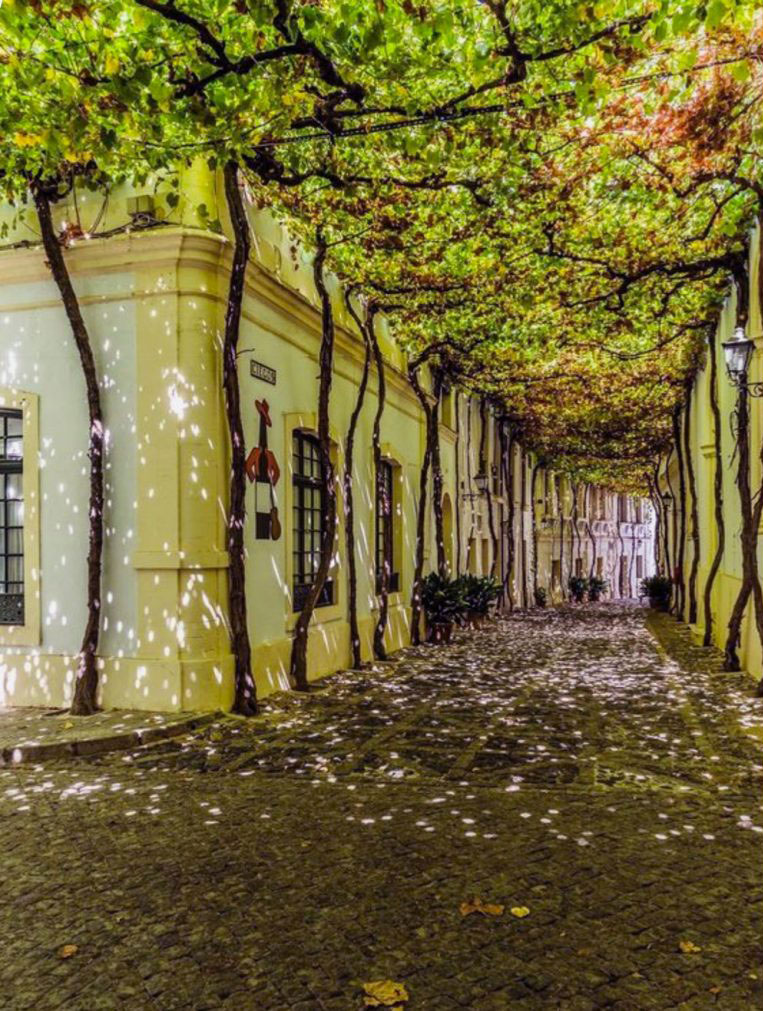
Above: Jerez, Espanya
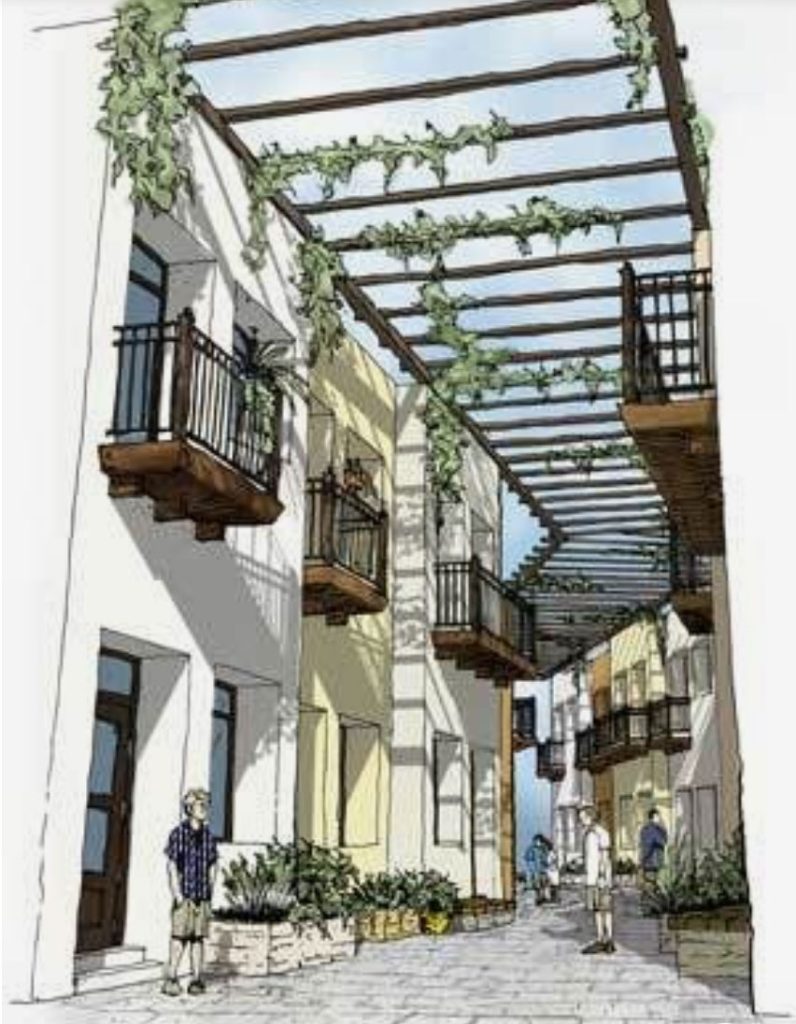
Tucson, Arizona
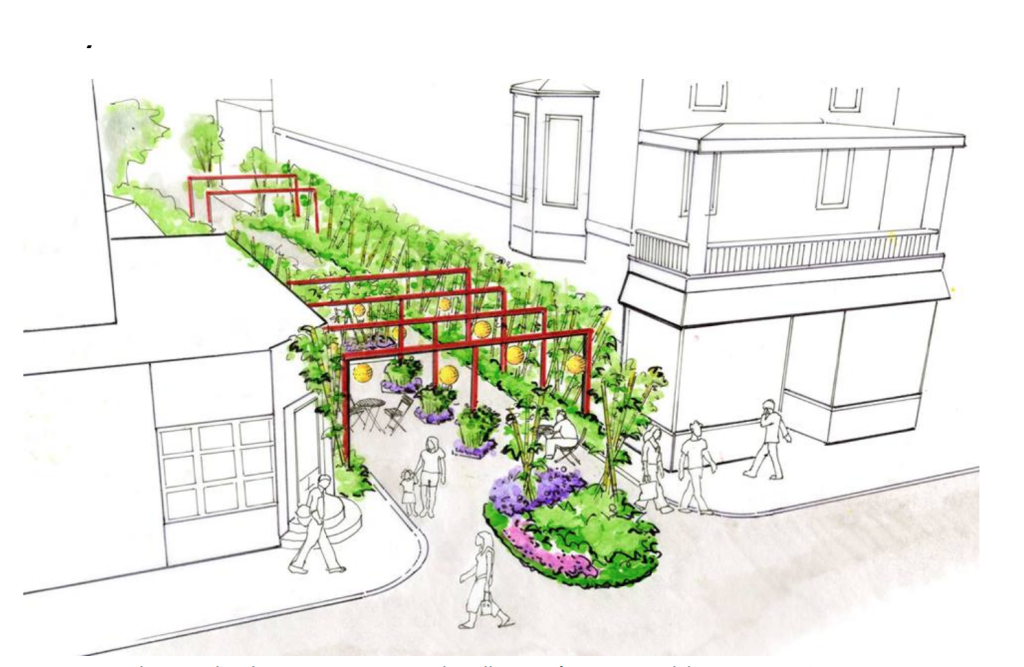
Conceptes Arquitectònics per a Doylestown, USA
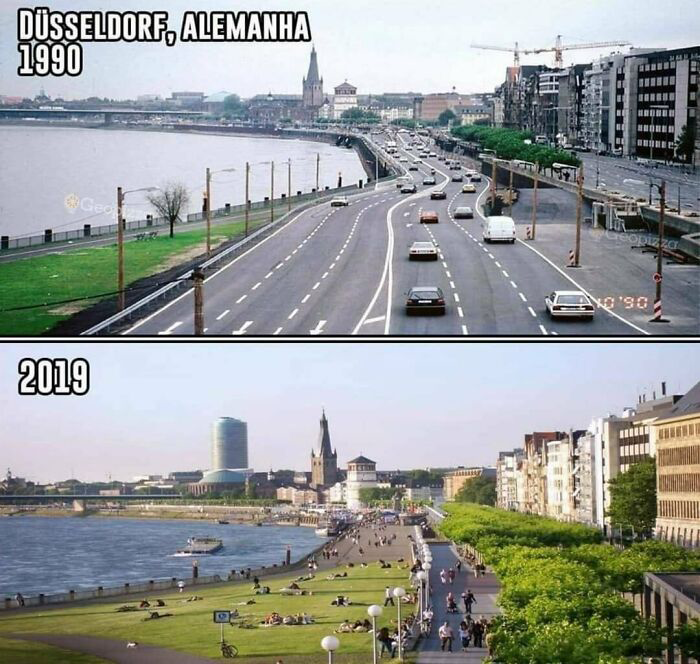
Above: Düsseldorf, Alemanya.
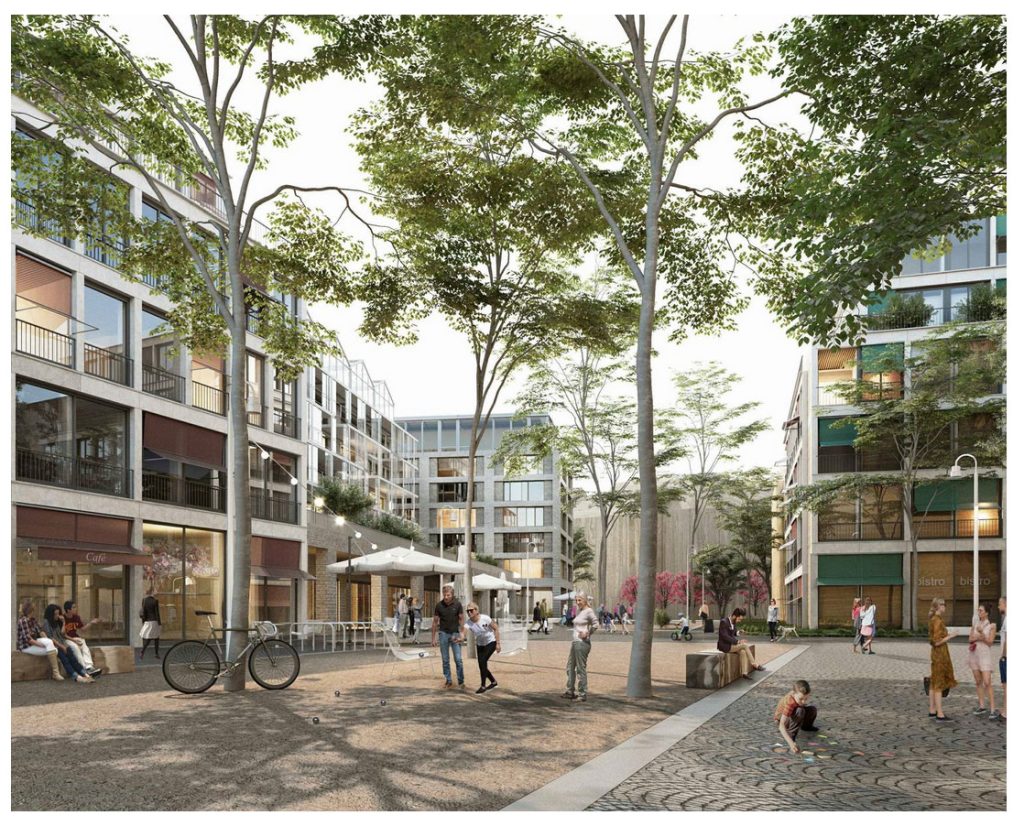
Above: Düsseldorf, Alemanya.
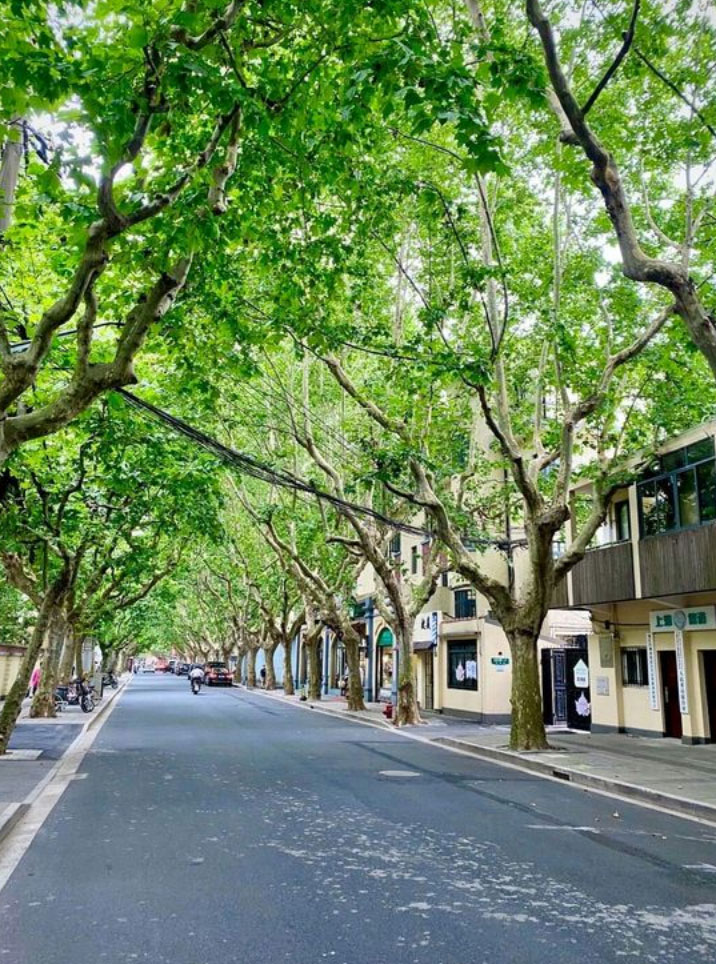
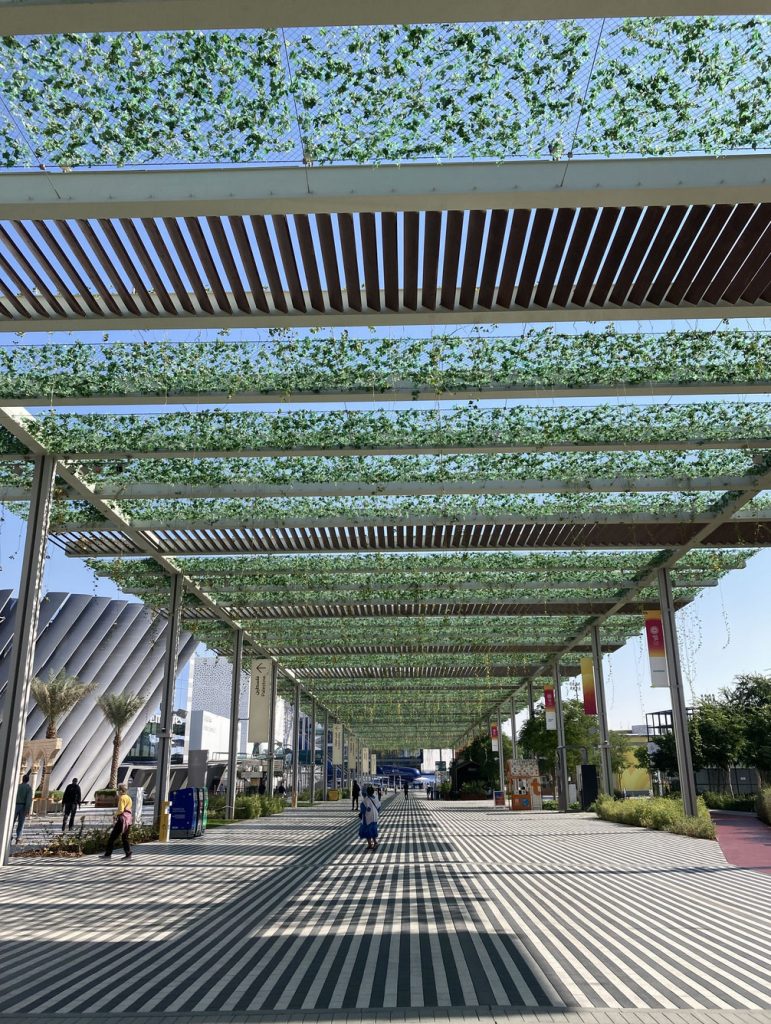
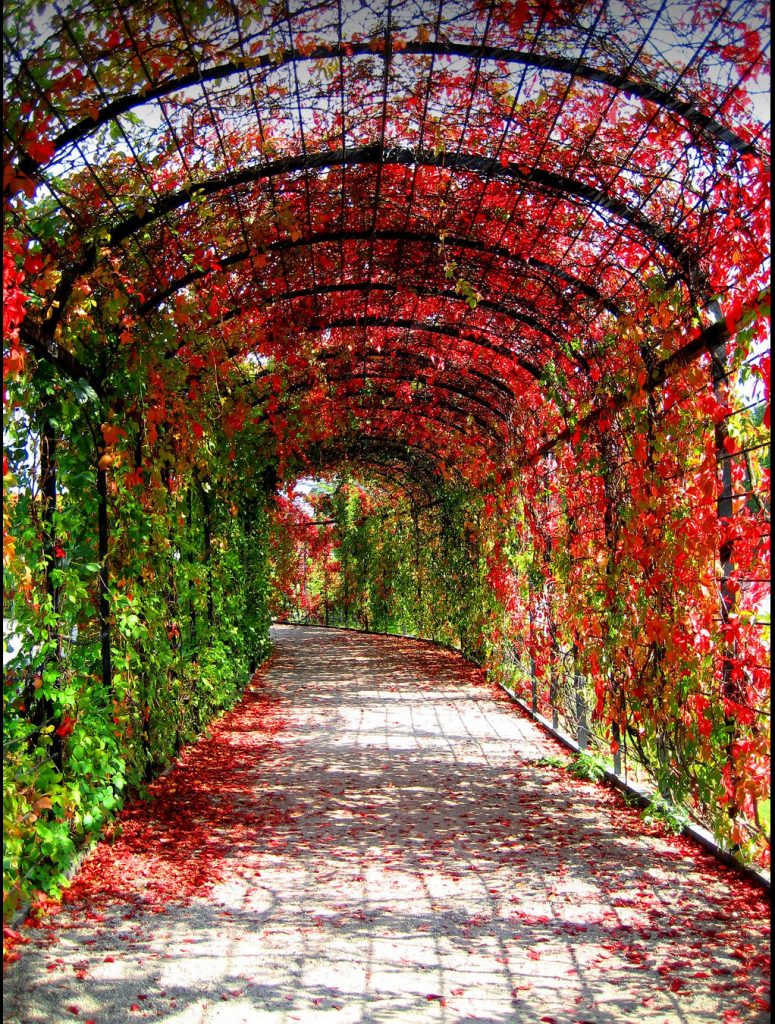
Above: Exemples d’arreu del món.
Why have more trees and shade on the streets?
With no trees or shade on the streets, people are forced to use their cars or stay at home.
More people staying at home or indoors increases the risk of:
- social isolation
- disconnection of local services
- fewer customers for shops, independent shops and local businesses
- disintegration of the community
The risk of more cars
More cars on the road increase the risk of:
- pollution
- traffic noise
- shortage of parking spaces
- need for larger parking lots
- traffic congestion
- less social life on the street
- danger to other road users and pedestrians
- fewer people passing by shops and independent businesses
- poor health of citizens due to lack of exercise
- higher stress levels
… and a less pleasant and pleasant city to live in!
Problem areas in Banyoles:
In the summer, several streets in Banyoles are too hot to walk, walk or cycle.
Here are some examples of streets that connect different neighbourhoods/areas, busy areas and paths designed for cyclists/pedestrians:
Passeig Parc La Draga (North)
There is no shade for pedestrians or cyclists.
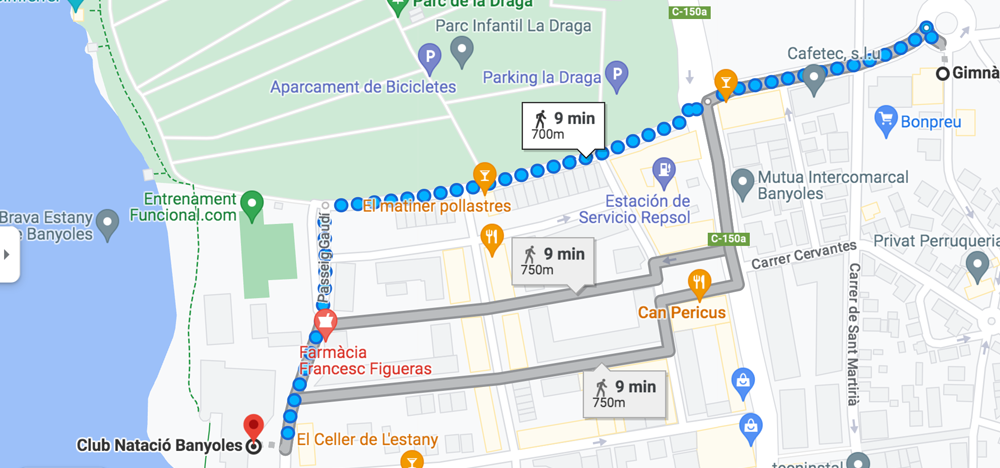
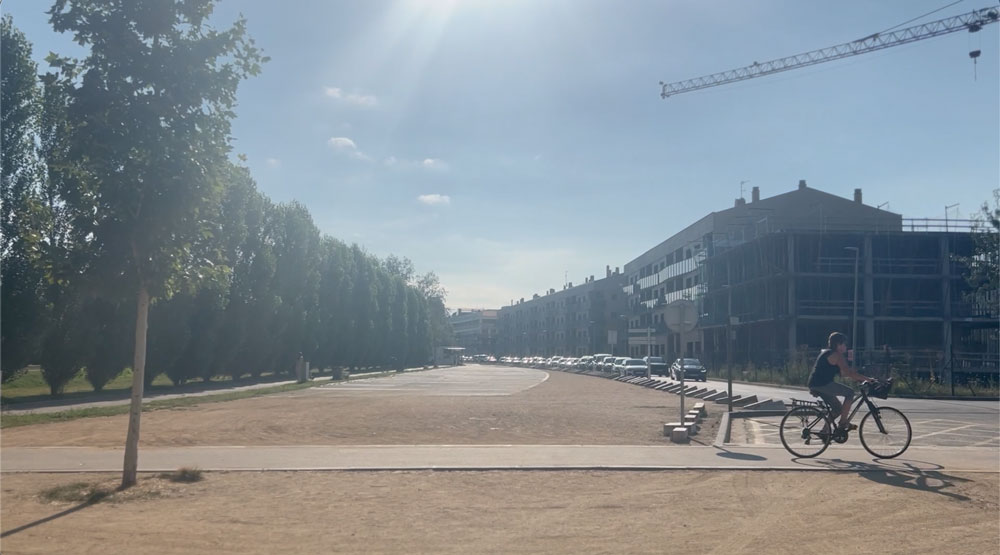
Exterior of Club Natació
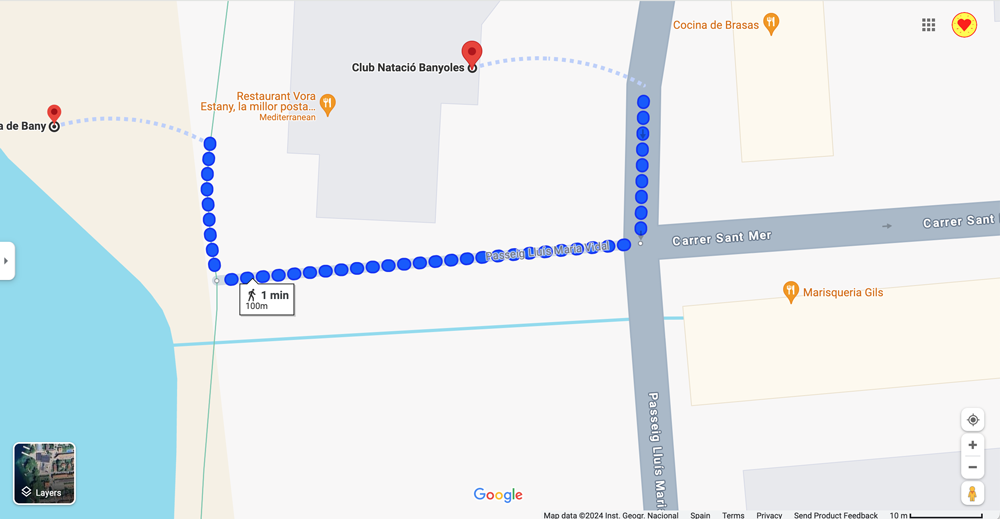
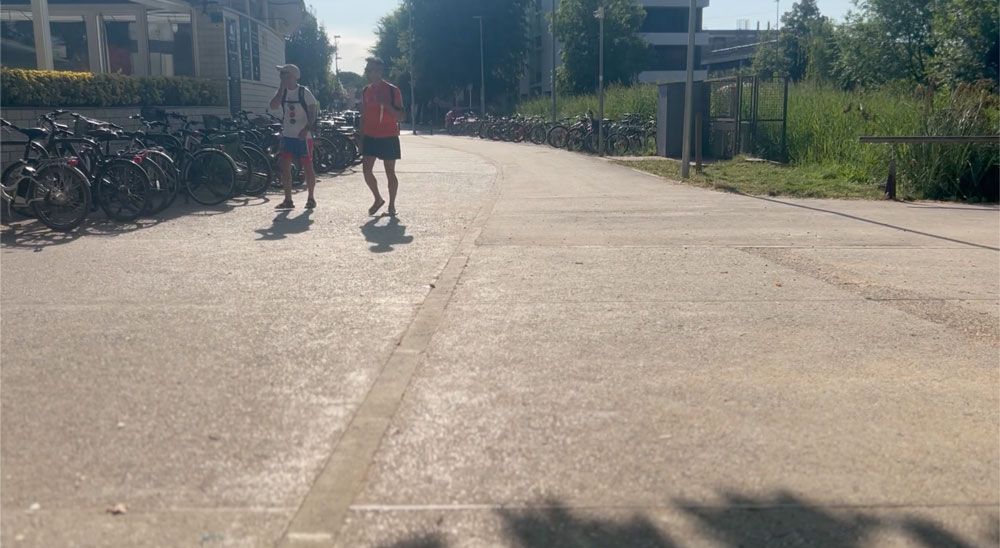
Between the lake and Passeig Lluís Maria Vidal / Passeig Antoni Gaudí.
The large trees were cut down, but not replanted. There is no shade for pedestrians or cyclists, and increased traffic noise towards the lake and restaurant.
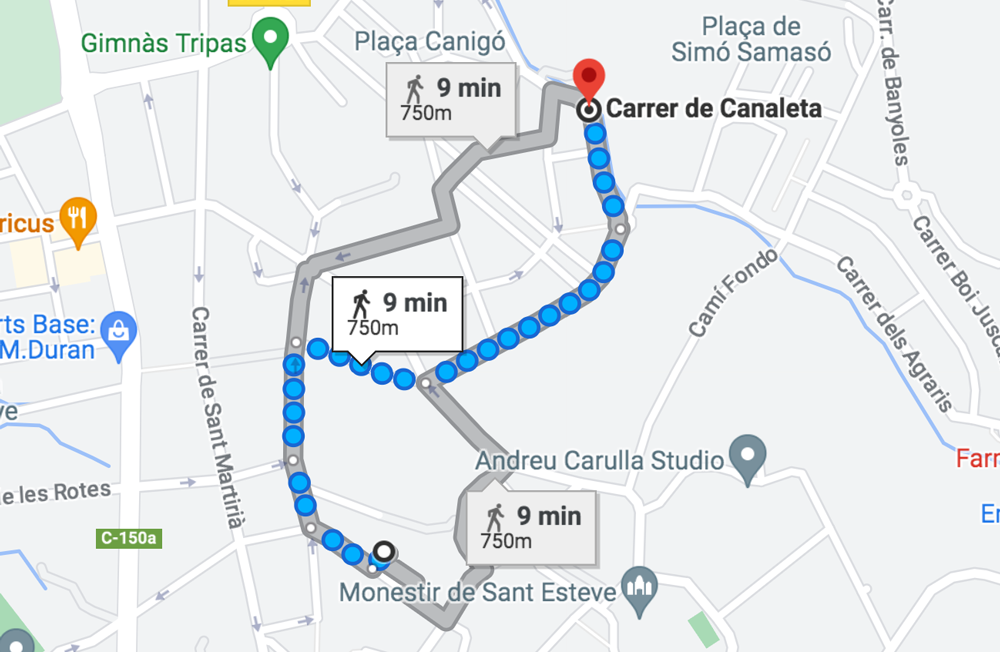
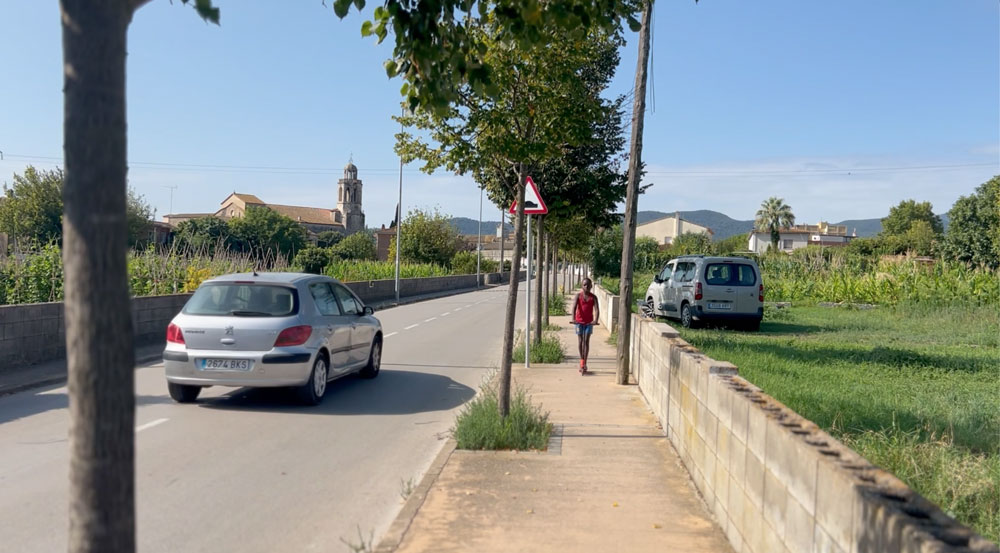
Cami Fondo (Canaleta to Centre)
Streets between the Canaleta neighborhood and the Monastery / the centre.
Lack of adequate shade for pedestrians or cyclists.
La Farga to the Centre
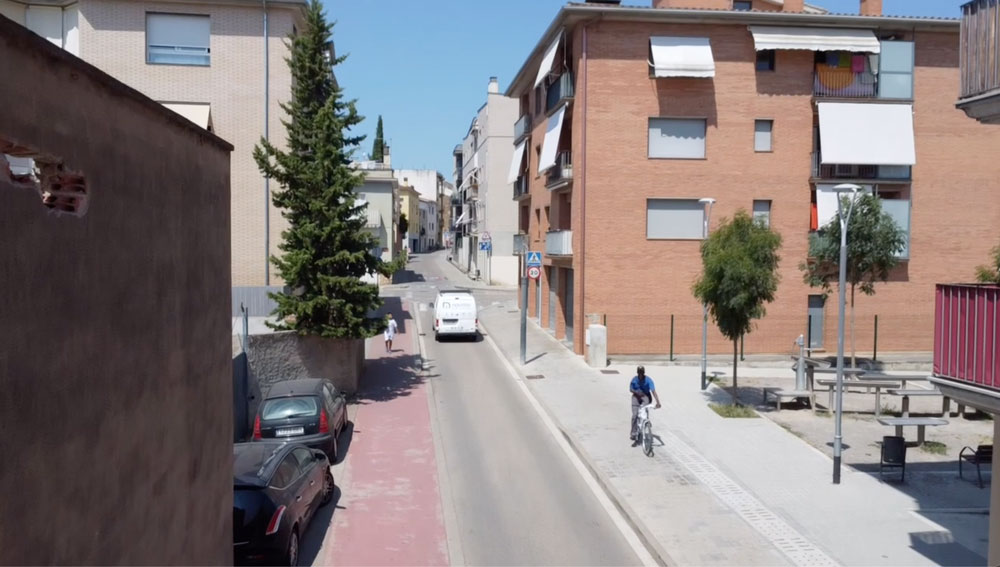
Streets between the La Farga neighborhood and the city center.
Lack of shade for pedestrians or cyclists.
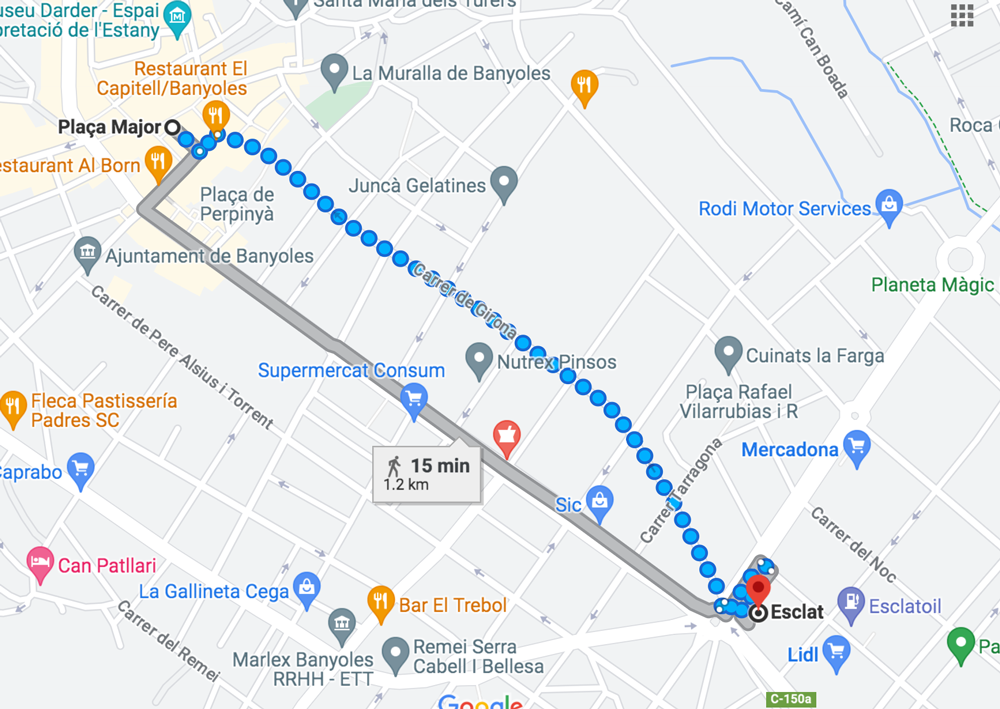
Carrer Girona is a giant heat island.
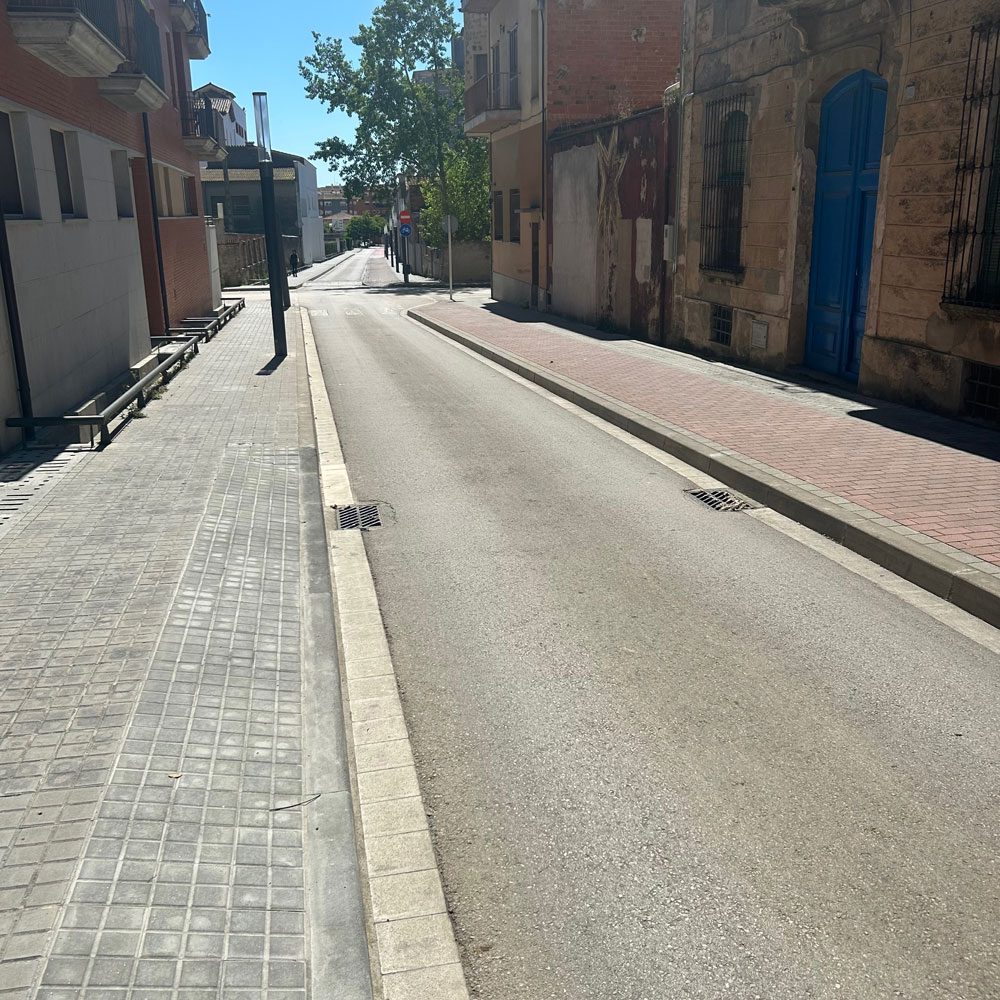
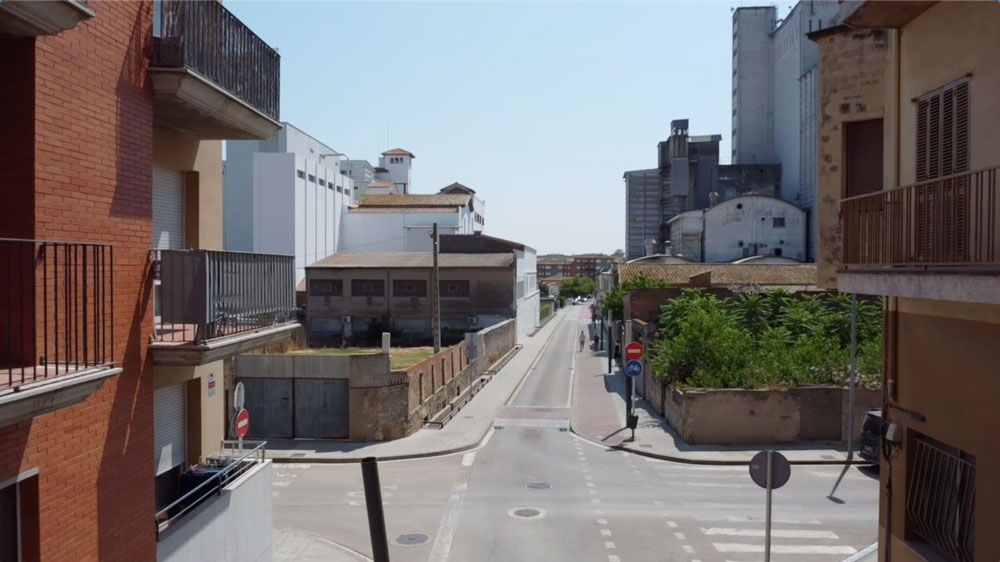
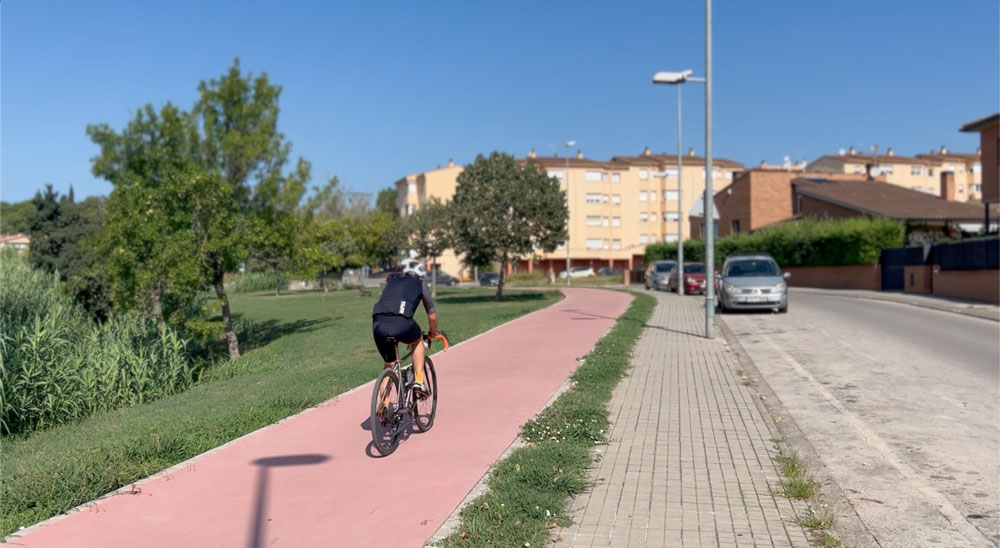
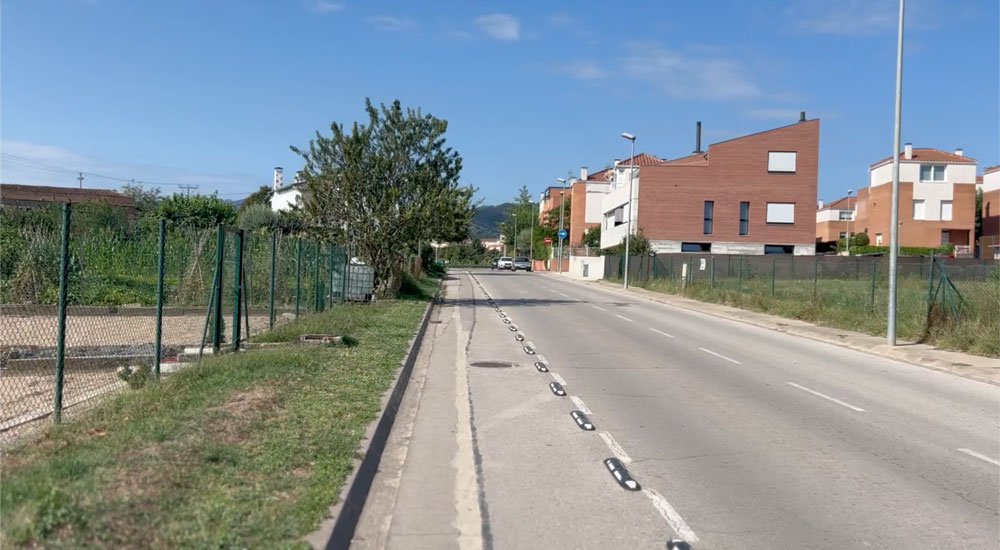
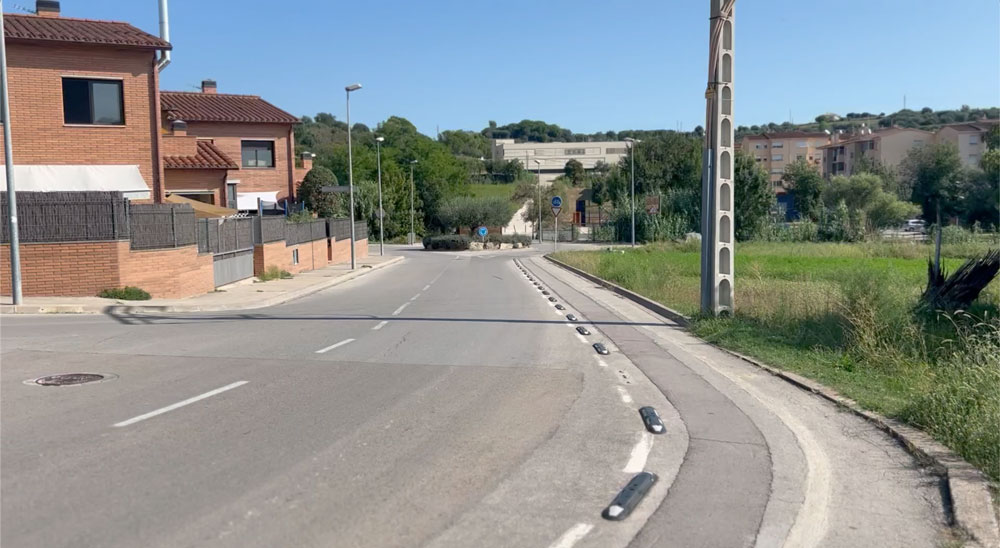
Via Verda / Bike Lanes (Canaleta)
Long stretches of the connecting bike path have no shade for pedestrians or cyclists.
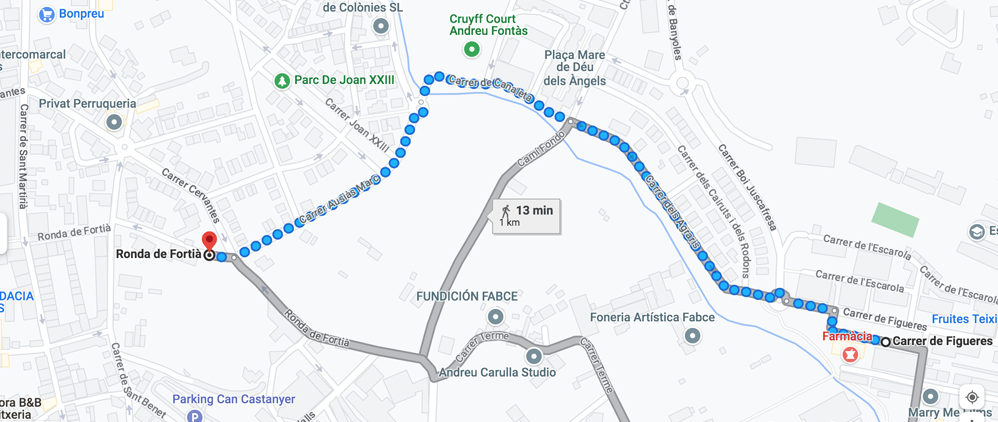
Centre to Supermercats
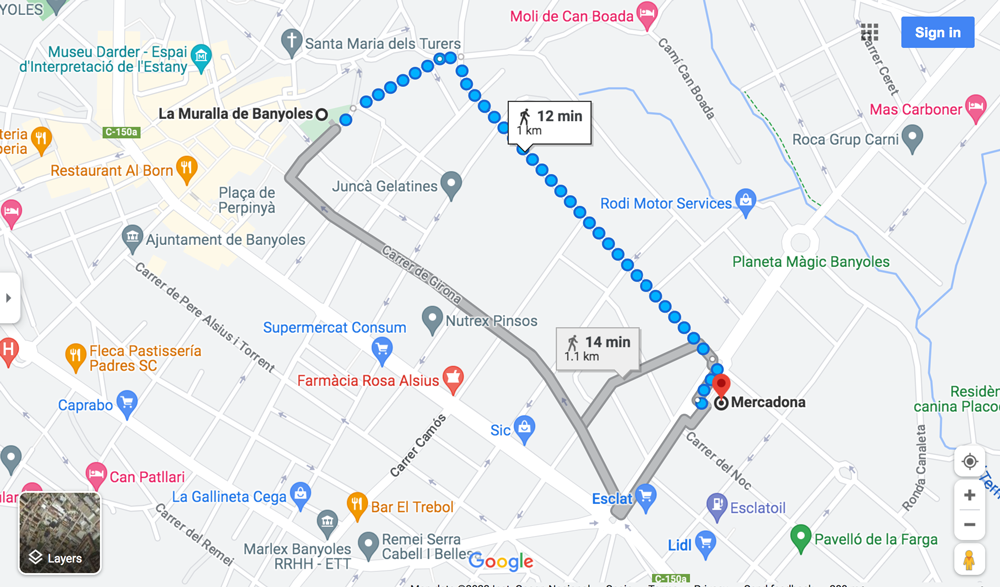
Connecting roads between the monastery, the town center and the supermarket area (south of Avinguda de la Farga).
No shade for pedestrians or cyclists.
Ronda Monestir
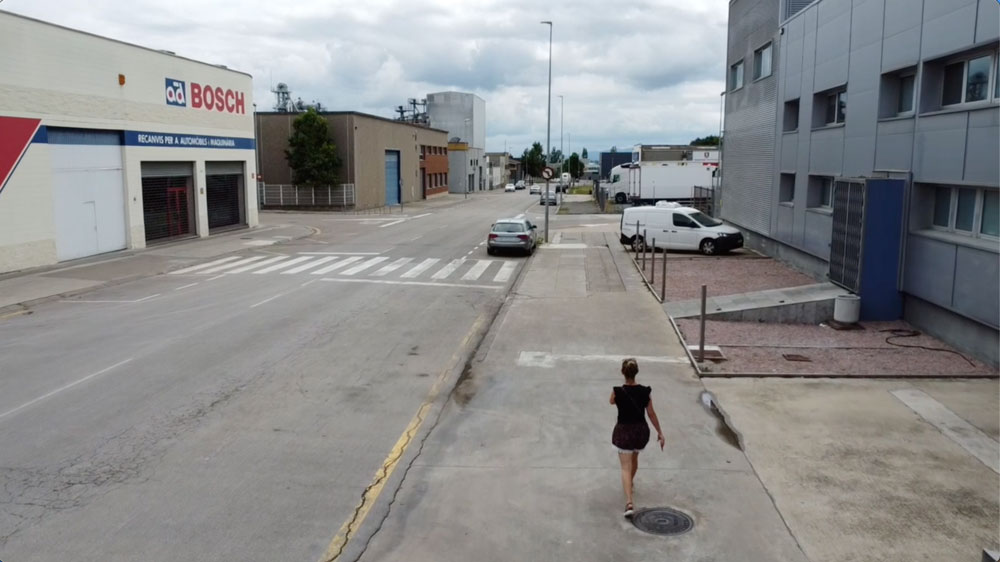
Avinguda Països Catalans
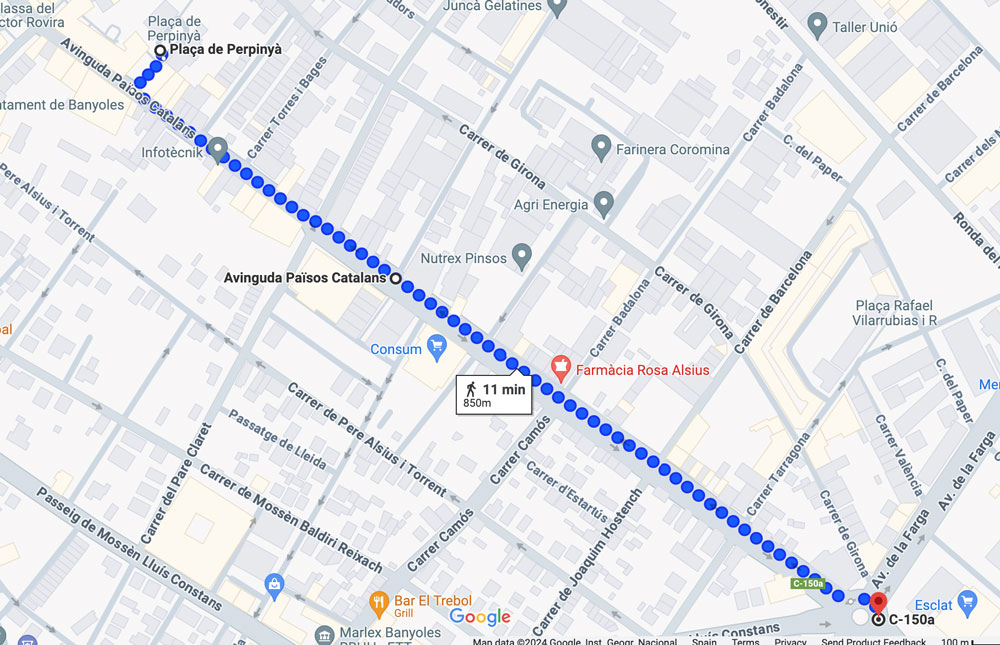
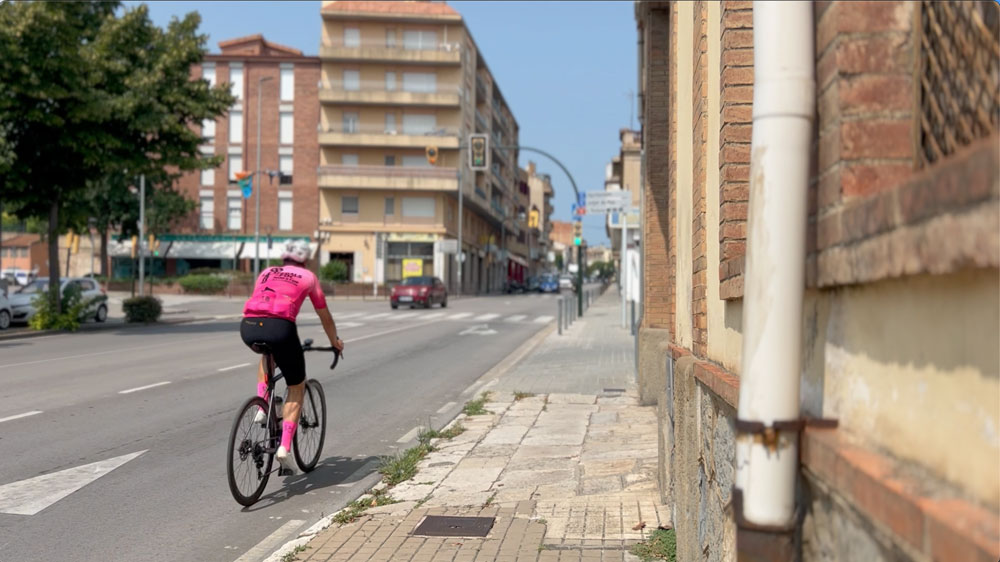
These are some examples, you may know others.
Scientific data
Trees, shade and climate changes
In addition to refreshing city streets, urban trees are excellent filters of urban pollutants and also of fine particles.
A single tree can absorb up to 150 kg of CO₂ a year, sequester carbon and combat the effects of climate change.
According to the Food and Agriculture Organization of the United Nations, 1 street trees provide habitat, food and protection for plants and animals, and increase urban biodiversity.
Urban trees also:
they retain atmospheric moisture
they reduce surface slides of rainwater
they reduce the temperature of buildings
they clean the air of toxins
they reduce human cortisol levels
they improve street culture
they reinforce citizens’ sense of identity and belonging
you provide food (nuts / berries / fruits) to humans, insects and birds
reduce crime levels 2
they create visible beauty for all citizens
they make Banyoles a more desirable and pleasant place to live
the number of cyclists and pedestrians increases
Planting street trees today is essential for future generations!
Article Copyright © Pulmó Verd 2024/5
Action:
We ask that the City take responsibility for planting more trees and creating more shade to prepare for climate change now!
Sign the Campaign to Get More Trees and shade in the streets of Banyoles!
Sign below:

Click this link to sign the petition with Change.org!
Referències:
- Food and Agriculture Organisation of the United Nations (FAO)
Benefits of Urban Trees (English): https://www.fao.org/documents/card/en/c/C0024E/
Beneficios De Los Árboles Urbanos (Espanyol):
https://www.fao.org/documents/card/en/c/C0024S
https://www.fao.org/documents/card/es?details=C0024S - “10% increase in tree canopy was associated with a roughly 12% decrease in crime.” United States Department of Agriculture (.gov) at https://www.fs.usda.gov/research/treesearch/40701#
- Ref: Austin Troy, J. Morgan Grove, Jarlath O’Neill-Dunne ‘The relationship between tree canopy and crime rates across an urban-rural gradient in the greater Baltimore region’ (Scientific Journal, Landscape and Urban Planning. 106: 262-270, 2012): DOI: https://doi.org/10.1016/j.landurbplan.2012.03.010
Beneficis dels arbres – Citacions i estudis:
Els beneficis dels arbres urbans (en anglès)
Font: https://californiareleaf.org/resources/benefits-of-trees/
Anderson, L.M., and H.K. Cordell. “Influence of Trees on Residential Property Values in Athens, Georgia (U.S.A.): A Survey Based on Actual Sales Prices.” Landscape and Urban Planning 15.1-2 (1988): 153-64. Web: http://www.srs.fs.usda.gov/pubs/ja/ja_anderson003.pdf
Armson, D., P. Stringer, & A.R. Ennos. 2012. “The Effect of Tree Shade and Grass on Surface and Globe Temperatures in an Urban Area.” Urban Forestry & Urban Greening 11(1):41-49.
Bellisario, Jeff. “Linking the Environment and the Economy.” Bay Area Council Economic Institute, May 12, 2020. Web: http://www.bayareaeconomy.org/report/linking_the_environment_and_the_economy/.
Connolly, Rachel, Jonah Lipsitt, Manal Aboelata, Elva Yañez, Jasneet Bains, Michael Jerrett, “The association of green space, tree canopy and parks with life expectancy in neighborhoods of Los Angeles,” Environment International, Volume 173, 2023, 107785, ISSN 0160-4120. Web: https://doi.org/10.1016/j.envint.2023.107785.
Fazio, Dr. James R. “How Trees Can Retain Stormwater Runoff.” Tree City USA Bulletin 55. Arbor Day Foundation. Web: http://www.fs.fed.us/psw/programs/uesd/uep/products/11/800TreeCityUSABulletin_55.pdf
Dixon, Karin K., and Kathleen L. Wolf. “Benefits and Risks of Urban Roadside Landscape: Finding a Livable, Balanced Response.” 3rd Urban Street Symposium, Seattle, Washington. 2007. Web. http://www.urbanstreet.info/3rd_symp_proceedings/Benefits%20and%20Risks.pdf
Donovan, G. H., Prestemon, J. P., Gatziolis, D., Michael, Y. L., Kaminski, A. R., & Dadvand, P. (2022). The association between tree planting and mortality: A natural experiment and cost-benefit analysis. Environment International, 170, 107609. Web: https://doi.org/10.1016/j.envint.2022.107609
Endreny, T. , R. Santagata, A. Perna, C. De Stefano, R. F. Rallo, and S. Ulgiati. “Implementing and Managing Urban Forests: A Much Needed Conservation Strategy to Increase Ecosystem Services and Urban Wellbeing.” Ecological Modelling 360 (September 24, 2017): 328–35. Web: https://doi.org/10.1016/j.ecolmodel.2017.07.016.
Heidt, Volker, and Marco Neef. “Benefits of Urban Green Space for Improving Urban Climate.” In Ecology, Planning, and Management of Urban Forests: International Perspectives, edited by Margaret M. Carreiro, Yong-Chang Song, and Jianguo Wu, 84–96. New York, NY: Springer, 2008. Web: https://doi.org/10.1007/978-0-387-71425-7_6.
Knobel, P., Maneja, R., Bartoll, X., Alonso, L., Bauwelinck, M., Valentin, A., Zijlema, W., Borrell, C., Nieuwenhuijsen, M., & Dadvand, P. (2021). Quality of urban green spaces influences residents’ use of these spaces, physical activity, and overweight / obesity. Environmental Pollution, 271, 116393. Web: https://doi.org/10.1016/j.envpol.2020.116393
Kuo, Frances, and William Sullivan. “Environment and Crime in the Inner City: Does Vegetation Reduce Crime?” Environment and Behavior 33.3 (2001). Web: http://www.outdoorfoundation.org/pdf/EnvironmentAndCrime.pdf
McPherson, Gregory, James Simpson, Paula Peper, Shelley Gardner, Kelaine Vargas, Scott Maco, and Qingfu Xiao. “Coastal Plain Community Tree Guide: Benefits, Costs, and Strategic Planting.” USDA, Forest Service, Pacific Southwest Research Station. (2006). Web: http://www.fs.fed.us/psw/programs/uesd/uep/products/2/cufr_679_gtr201_coastal_tree_guide.pdf
McPherson, Gegory, and Jules Muchnick. “Effects of Street Tree Shade on Asphalt and Concrete Pavement Performance.” Journal of Arboriculture 31.6 (2005): 303-10. Web: http://www.fs.fed.us/psw/publications/mcpherson/psw_2005_mcpherson001_joa_1105.pdf
McPherson, E. G., & R. A. Rowntree. 1993. “Energy Conservation Potential of Urban Tree Planting.” Journal of Arboriculture 19(6):321-331. Web: http://www.actrees.org/files/Research/mcpherson_energy_conservation.pdf
Matsuoka, RH. 2010. “High School Landscapes and Student Performance.” Dissertation, University of Michigan. Web: https://hdl.handle.net/2027.42/61641
Mok, Jeong-Hun, Harlow C. Landphair, and Jody R. Naderi. “Landscape Improvement Impacts on Roadside Safety in Texas.” Landscape and Urban Planning 78.3 (2006): 263-74. Web: http://www.naturewithin.info/Roadside/RdsdSftyTexas_L&UP.pdf.
NJ Forest Service. “Benefits of trees: trees enrich the health and quality of our environment”. NJ Department of Environmental Protection. Web: http://www.state.nj.us/dep/seeds/docs/bot.pdf
Nowak, David, Robert Hoehn III, Daniel, Crane, Jack Stevens and Jeffrey Walton. “Assessing Urban Forest Effects and Values Washington, D.C.’s Urban Forest.” USDA Forest Service. (2006). Web: http://www.nrs.fs.fed.us/pubs/rb/nrs_rb001.pdf
Sinha, Paramita; Coville, Robert C.; Hirabayashi, Satoshi; Lim, Brian; Endreny, Theodore A.; Nowak, David J. 2022. Variation in estimates of heat-related mortality reduction due to tree cover in U.S. cities. Journal of Environmental Management. 301(1): 113751. 13 p. Web: https://doi.org/10.1016/j.jenvman.2021.113751.
Strong, Lisa, (2019). Classrooms Without Walls: A study in Outdoor Learning Environments to Enhance Academic Motivation for K-5 Student. Master Thesis, California State Polytechnic University, Pomona. Web: https://scholarworks.calstate.edu/concern/theses/w3763916x
Taylor, Andrea, Frances Kuo, and Williams Sullivan. “Coping with ADD the Surprising Connection to Green Play Settings.” Environment and Behavior (2001). Web. http://www.outdoorfoundation.org/pdf/CopingWithADD.pdf.
Tsai, Wei-Lun, Myron F. Floyd, Yu-Fai Leung, Melissa R. McHale, and Brian J. Reich. “Urban Vegetative Cover Fragmentation in the U.S.: Associations With Physical Activity and BMI.” American Journal of Preventive Medicine 50, no. 4 (April 2016): 509–17. Web: https://doi.org/10.1016/j.amepre.2015.09.022.
Tsai, Wei-Lun, Melissa R. McHale, Viniece Jennings, Oriol Marquet, J. Aaron Hipp, Yu-Fai Leung, and Myron F. Floyd. “Relationships between Characteristics of Urban Green Land Cover and Mental Health in U.S. Metropolitan Areas.” International Journal of Environmental Research and Public Health 15, no. 2 (February 14, 2018). Web: https://doi.org /10.3390/ijerph15020340.
Ulrich, Roger S. “The Value of Trees to a Community” Arbor Day Foundation. Web. 27 June 2011. Web: http://www.arborday.org/trees/benefits.cfm.
University of Washington, College of Forest Resources. Urban Forest Values: Economic Benefits of Trees in Cities. Rep. Center for Human Horticulture, 1998. Web: http://www.cfr.washington.edu/research/factSheets/29-UrbEconBen.pdf.
Van Den Eeden, Stephen K., Matthew H.E.M. Browning, Douglas A. Becker, Jun Shan, Stacey E. Alexeeff, G. Thomas Ray, Charles P. Quesenberry, Ming Kuo.
“Association between residential green cover and direct healthcare costs in Northern California: An individual level analysis of 5 million persons”
Environment International 163 (2022) 107174. Web: https://www.sciencedirect.com/science/article/pii/S0160412022001003
Wheeler, Benedict W. , Rebecca Lovell, Sahran L. Higgins, Mathew P. White, Ian Alcock, Nicholas J. Osborne, Kerryn Husk, Clive E. Sabel, and Michael H. Depledge. “Beyond Greenspace: An Ecological Study of Population General Health and Indicators of Natural Environment Type and Quality.” International Journal of Health Geographics 14 (April 30, 2015): 17. Web: https://doi.org/10.1186/s12942-015-0009-5.
Wolf, K. L. 2005. “Business District Streetscapes, Trees and Consumer Response.” Journal of Forestry 103(8):396-400. Web: https://www.fs.usda.gov/pnw/pubs/journals/pnw_2005_wolf001.pdf
 English